.webp)
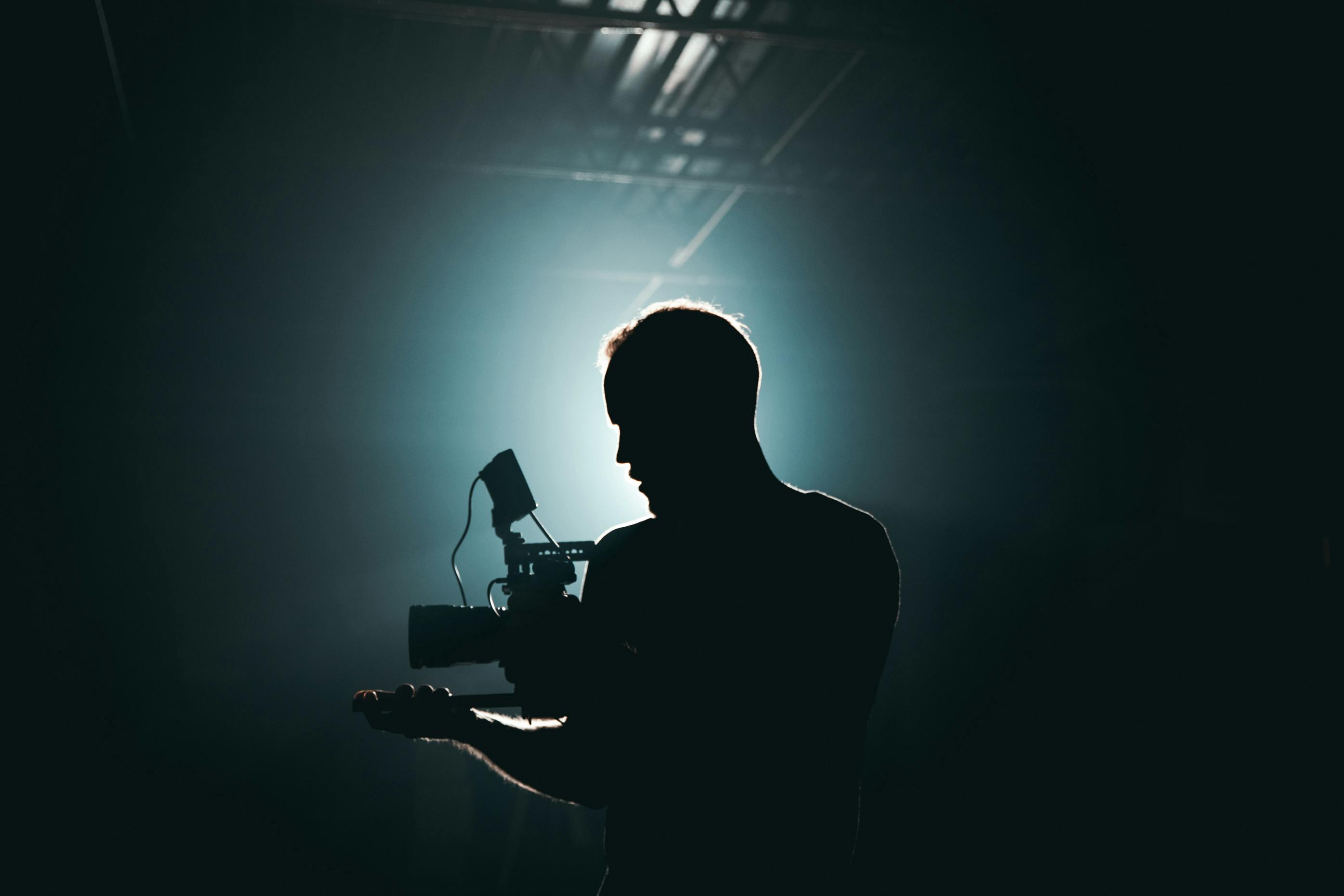
Event video immortalizes your key moments and extends their impact well beyond the big day. Whether it's a major conference, a trade show or a corporate celebration, capturing the energy of the moment in images turns your event into lasting and memorable content. Kosmos, Social Ads video agency in Bordeaux, supports companies and organizations in the production of event videos that tell your stories with impact and professionalism.
A well-produced event video is much more than a simple recording: it becomes a powerful communication tool that amplifies your message, engages your audience, and generates measurable feedback. The 78% of businesses that use video for events in 2025 see an average increase of 42% in engagement with their content published online. According to EventMB, reference in the event industry, event videos have become an essential part of modern engagement strategies.
This article explores strategies and methods for designing, filming, and editing an event video that meets your business goals. From the first minutes of recording to the finishing of the editing, discover how to transform each moment into viral and shareable content.

Why invest in event video
Event video generates a higher ROI than other event content formats. It extends the life of your event by making it accessible to those who could not be present and creates a common good from the lived experience.
The benefits are multiple and measurable. Here are the main challenges that quality event video production solves:
- Expanding the range : your event reaches not only your 500 physical participants, but potentially thousands of people via social networks, your website and email marketing.
- Strengthening your brand image : a professional video positions your company as legitimate, innovative and trustworthy with your partners and prospects.
- Creating a reusable asset : the most engaging sequences are used for social networks, your sales presentations, your home page and your internal training courses.
- Social proof and FOMO : seeing images of your online event encourages other prospects to register for future editions or to contact you for partnerships.
- Analysis and optimization : viewing data (duration, drop-off, clicks) feeds your content strategy for upcoming events.
Event video is therefore not an additional budget, it is an investment in sustainable content that pays for itself over several quarters through the commercial activation and reputation it generates.
The types of event video and their uses
A robust event strategy combines multiple video formats, each with a specific purpose and duration. Choosing the type of video depends on your target audience, broadcast schedule, and distribution channels.
Here are the main event video formats and when to use them:
- Aftermovie : an emotional summary of the event in 3-5 minutes, used after the event to extend engagement and create buzz. The most shared format on LinkedIn and Instagram.
- Live recording and replay : full or edited recording of the event, distributed the same day or within 48 hours to reach those who could not attend. Great for conferences and webinars
- Pre-event teaser : 30-60 second trailer released 2-4 weeks before the event to create excitement and boost registrations.
- Interview speakers : 1-2 minute extracts with your key speakers, used before and after the event to give weight to your communication.
- Process trailer : behind the scenes showing the preparations, the installation, the rehearsals, to humanize your event and strengthen the engagement of participants beforehand.
Each of these formats requires a different capture and editing approach. The aftermovie requires a very close narration and a careful selection of the best shots. Live recording requires a robust technical infrastructure and direct control. Teasers require maximum concentration on emotion and plot. For businesses looking for a more structured and polished approach, the corporate video combines professional elements and event techniques.
The key steps in the production of an event video
Producing a quality event video follows a structured process that starts several weeks before D-Day and continues after. Respecting each step guarantees a professional and usable result.

Define your goals and video brief
Before even talking about capture, define your goals precisely: generate leads, strengthen your brand, document your event, or create social content. Each of these challenges guides the choices of filming, editing and distribution.
Your brief should specify: the type of video, the final duration, the key events not to be missed, your important speakers, the desired visual identity, the distribution channels and your target audience. A comprehensive brief saves editing days and avoids unpleasant surprises.
- Type of final product : aftermovie, full capture, short clips, teaser, interview or a combination of several.
- Duration and format : a LinkedIn video (1-3 min), an Instagram Reels teaser (15-30 sec), or a commercial presentation (5-10 min).
- Critical moments to capture : opening, keynotes, poses, awards ceremony, room atmosphere, participant testimonies.
- Visual identity : brand colors, signature music, theme animations, calibration colors.
Plan the shooting and the film crew
Event video requires a well-established team and technical resources adapted to your location and your size. A small workshop doesn't need the same cameras and the same number of cameramen as a 2,000 person conference.
For a standard event (200-500 participants) over a day, plan: 2 to 3 main cameras, 1 emergency camera, 1 drone operator (if authorized), 1 or 2 camera operators, 1 sound engineer, 1 project manager. A too small team generates repetitive plans and misses out on the best moments. An oversized team makes production expensive.
Preparing the location is also critical: scouting the day before or at least a few hours in advance, identifying the best camera positions, checking electrical outlets, testing audio connections, scouting natural and artificial light.
Capture with intention and creativity
Event filming isn't just “pressing REC.” Every plan counts. Varying the angles of view (wide, half-set, close-up), heights (dive, low angle, level), movements (slow panoramas, progressive zooms) and detail planes (hands, faces, brand inscriptions) significantly enriches your production and creates visual dynamism.
The best event videographers capture unscripted moments: the visceral reaction of one person in the foreground, the passionate conversation between two participants, the astonished look of the audience. These moments add the authenticity and emotion that your audience is looking for.
- Wide planes : general context of the room, entire audience, atmosphere, decor, visual air intake.
- Half-set plans : speaker at the podium, interaction with the public, travel, scene changes.
- Close-ups and close-ups : facial expressions, product demonstration, decor details, company logo.
- Planes in motion : steadicam in the corridors, drone for aerial views, slider figures to show depth.
- Transition and detail plans : zoom on the names of the speakers, buffet maps, moments of relaxation, exchanges of business cards.

Also capture quality audio: direct XLR recording of the speakers via lavalier microphone or standing microphone, general atmosphere (applause, reactions), interviews on site. Professional audio doubles the perceived impact of your video. For a quality event, collaborate with an experienced team in professional video shooting guarantees a capture without unpleasant surprises.
Organize and sort your rushes
After filming, you potentially have 40-60 hours of raw footage for an event day. Organizing them well before editing saves you weeks of work. Create a clear architecture: folders per hour, per speaker, per location, with notes annotating the best passages.
Rushes of varying quality must be sorted out immediately: identify the 3-5% of exceptional shots that will become your common narrative thread, and the 40-50% of fill shots (transitions, ambiance, inserts).
Assembly and calibration: from rough to professional
Editing turns your rushes into a story. Start with raw assembly: place your best shots in chronological or narrative order. Then refine: illuminated cuts for rhythm, music added to the timing of the edit, dynamic transitions, texts and contextualizing data. A good practice is to collaborate with experts in video editing who know the subtleties of rhythm and transitions.
Color grading combines visual aesthetics and creates a cinematographic signature. Applied overall, it reinforces your brand identity and makes your production appear much more professional. On a 1-minute teaser, calibration can cost 200-500 euros. On a 5-minute aftermovie, 800-2000 euros. It's a profitable investment that increases your sharing rates by 30-40%.
Intertitles and graphics also play a key role: titles of interventions, names of speakers, calls to action, key statistics. They guide the viewer and reinforce your message.

Optimized distribution formats and channels
Your event video has several possible lives, each requiring a different format and a different tactic. The same raw content can generate: a 5 min YouTube aftermovie, 5-10 TikTok/reels clips 15-30 sec, 2-3 LinkedIn clips 1-2 min, animated GIFs, high-resolution photos.
Producing once, broadcasting several times: this is the principle of “repurposing”. The 73% of B2B companies that use this strategy see their content cost decrease by 35% for 3 times greater coverage.
YouTube: the parent company
YouTube welcomes your long version (5-10 min). Optimize the SEO title, description (with internal links to your other videos and site), event tags, chapters, and the final call to action. A good YouTube channel generates organic traffic 6-12 months after publishing and improves your domain authority.
LinkedIn: the professional and storytelling
Publish 1-3 minute snippets targeting HR, decision-makers, and professionals in your sector. LinkedIn favors videos published directly (not external links), with strong taglines in 2-3 lines. Self-promotion videos perform less well; focus on content that shares learnings or industry trends.
Instagram Reels and TikTok: the viral and the short
Create 15-30-second clips with subtitles, trending music, and dynamic transitions. These platforms prefer content that stops scrolling in 0.5 seconds. Your logo or call-to-action comes at the end of the clip, not at the beginning.
Email and website: the conversion
Integrate event videos on your home page (hero banner), your service pages, and your post-event emailings. Pages with video convert 80% better than without. Emailings with embedded video generate 300% higher click rates.
The costs and deadlines of an event video
The budget for an event video varies enormously depending on your ambitions, the complexity of the editing, and the size of the team. Here is a reference grid based on our regular productions:
| Video Type | Duration | Indicative Budget | Main Channel | Delivery Time |
|---|---|---|---|---|
| Pre-event Teaser | 30-60 seconds | €800 - €1,500 | Instagram Reels, LinkedIn | <