
In today's marketing landscape, video is an essential pillar for capturing attention and engaging audiences. But faced with the rise of user-generated content (UGC) and the sophistication of professional productions, brands are facing a strategic choice: should they rely on the spontaneous authenticity of UGC or on the controlled prestige of pro video?
This choice is never trivial. It depends directly on the objectives, the budget, and the profile of the targeted audience. In France, some brands rely on proximity thanks to amateur content, while others keep high-end production in their sights, promoting their brand image and expertise.
In the coming chapters, this overview will provide an understanding of each approach, their fundamental differences, and the trends that dictate video communication in 2026. We take a closer look at everything you need to know to choose the right route and maximize the impact of your video communication.
Chez Kosmos, our video agency supports brands in the creation of powerful audiovisual content, designed for the web and social networks. Specialized in the production of creative and tailor-made formats, we put our expertise at the service of your image, by designing videos that combine aesthetics, narration and efficiency. As an expert video agency, we are committed to producing content that enhances your messages and maximizes the impact of your digital communication.
Define UGC and professional video
UGC, or User Generated Content, refers to any content — especially video — created and shared by the users of a brand: customers, fans, or followers. These videos are shot most of the time with smartphones or accessible devices, without professional intervention or extensive technical constraints.
On the other hand, professional video includes all video content produced by specialized studios or dedicated teams. This format involves sophisticated technical means: high-end cameras, professional lighting, advanced scripting and editing... Everything is designed to serve a controlled rendering and transmit a premium image.
UGC was born from an era where social networks and sharing platforms liberated the voice of users. Brands can spontaneously recover this material rich in authenticity to reinforce their trust capital. On the other hand, professional video has its origins in traditional communication: TV ads, institutional spots, and polished brand content.
At the heart of current digital marketing, these two formats respond to opposing logics. The UGC camps on the side of proximity and virality, even if it means sacrificing control. Pro video, on the other hand, asserts total control over the image, message and strong brand consistency. Clearly understanding these two definitions makes it possible to approach the rest of the analysis with an informed eye, and to immediately grasp the impacts of future strategic choices.
.webp)
Understand the importance of video content for brands
Today in France, video occupies a prominent place in digital communication strategies. In 2023, according to a study HubSpot/Statista, over 90% of consumers say that video helps them make a purchase decision. This format also dominates social networks: YouTube, Instagram, TikTok and Facebook generate billions of views every day, validating the public's appetite for the video format.
The engagement offered by video is significantly higher than that of other content. For example, the average engagement rate for a video on Instagram climbs to 1.5% compared to 0.3% for a classic post (Hootsuite France, 2023). Video also increases awareness: 87% of professionals surveyed by Wyzowl say that video content has a direct effect on the visibility of their brand.
On the conversion side, the video does not demerit. According to Renderforest, brands that use videos increase their conversion rate by an average of 34% in e-commerce. This channel also plays a key role in reinsurance and loyalty, as it humanizes the brand and shows the product in a real situation, which reassures the prospect.
Faced with these figures, it is becoming obvious that the question is no longer whether to invest in video, but rather to define which form — UGC or professional video — will best serve the brand's goals and constraints. This strategic dilemma is now at the forefront of modern marketing thinking.
Key differences between UGC and professional video
To really understand the challenges, you have to see that UGC and professional video embody two radically different visions of video communication. It's not just a question of budget or cost; each format creates a particular connection with the audience and shapes brand perception.
The main distinctions are played out on several levels: the quality of the visual rendering, the perceived authenticity, the necessary investment, the speed of execution and the ability to maintain brand consistency over time. Each of these criteria influences the choice between the spontaneity of UGC and the rigor of professional production.
In practice, the winning strategy does not simply depend on a black or white opposition. It is a question of understanding where these differences are located in order to adjust the right dosage according to your objectives. In future sub-sections, each of these points will be deciphered to allow brands to see more clearly and make well-founded decisions.
Production quality and visual aesthetics
Production quality is one of the major differences between UGC and professional video. UGC content is often filmed using personal resources: smartphones, action cameras, without dedicated lighting or editing teams. The visual aspect may seem spontaneous, sometimes even raw, which appeals to some audiences but may not be suitable for all sectors.
Professional video, on the other hand, benefits from advanced techniques: studied lighting, perfect composition, color treatment, careful post-production and calibrated soundtracks. This attention to detail reinforces the perception of quality and seriousness, which is essential for high-end brands or markets where visual trust is essential.
Authenticity and audience engagement
Authenticity is the great strength of UGC. According to a Stackla study, 79% of consumers find that user-generated content influences their purchasing decisions more than traditional brand content. Internet users trust their peers and engagement on this type of video often results in a higher rate of sharing and commenting.
Conversely, professional video is sometimes perceived as more distant or aseptic, although it gives prestige and seriousness to the brand. A successful UGC campaign, like that of GoPro or Airbnb, is based on social proof and digital word-of-mouth, triggering a natural and sustainable community dynamic.
.webp)
Costs and ROI of UGC and pro video strategies
In terms of cost, the difference can be considerable. UGC is much more economical: no heavy production costs, no dedicated team. Sometimes, motivating a community to create content is simply the same as organizing a competition or offering a fun product experience.
Professional video, on the other hand, requires a larger initial investment. Between the rental of equipment, the remuneration of the speakers and post-production, budgets can rise rapidly, ranging from a few thousand to several tens of thousands of euros depending on the complexity.
But the return on investment deserves analysis: a viral UGC video can generate massive visibility at a lower cost, while a professional, well-targeted video is valuable for promoting a product launch or reassuring BtoB partners. According to the 2023 Meltwater report, nearly 62% of French brands believe they are getting an ROI that exceeds their expectations with UGC, but 70% are still investing in pro video for structured or strategic campaigns. In both cases, couple these formats to a Social Ads video strategy makes it possible to considerably amplify the results.
Creation process: fast versus tailor-made
The process of creating a UGC is generally quick and easy. Users produce and deliver content themselves, without a tight schedule or cumbersome validation. Maximum agility, rapid responsiveness, but also less control over the process and the rendering.
On the other hand, professional production follows a precise workflow: brief, writing, shooting, post-production. We plan, we anticipate, we review. All with a level of control developed to ensure that the result fits perfectly with the values and strategy of the brand.
Consistency with brand identity
Maintaining visual and narrative coherence is a challenge: UGC, by its decentralized nature, often gives a plural image that is difficult to homogenize. The risk is to have messages or aesthetics that are scattered, compromising the clarity of the brand identity.
Professional video, on the other hand, makes it possible to transmit codes, graphics and key messages in a uniform manner. It is therefore essential for brands requiring absolute control of their image, especially over the long term and on high-stakes campaigns.
UGC: advantages, limitations and use cases
The enthusiasm around UGC is no accident. This format is part of an era where the voice of the customer and digital spontaneity are as valuable as the expertise of communicators. It seduces at the same time by its ability to create links, to arouse virality and to limit investments. To structure this approach, use a specialized UGC agency makes it possible to maximize the ROI while securing the quality of the content.
But UGC is not without drawbacks: lack of framing, random quality, or even the complexity of maintaining the overall coherence of the message. Brands must therefore learn to make the most of this format on the one hand, while remaining vigilant about its pitfalls.
It will then be a question of understanding in which contexts using UGC becomes a real advantage, and how to be inspired by the most striking campaigns that have been able to fully exploit user authenticity. We will also discuss the precautions to take to avoid legal or reputational missteps.
The strengths of UGC for your brand
Strengthened credibility: Content shared by a real customer has a power of recommendation that the brand cannot attribute to itself.
Community engagement: UGC promotes direct interaction and creates a sense of belonging around the brand.
Virality: Community-inspired content is more likely to be shared and go viral on social media.
Reduced cost: Little or no production costs for the brand, with content emerging spontaneously from the community.
UGC limitations and risks
Loss of control over the message: Impossible to validate everything beforehand, there is a risk of slippage.
Variable quality: The visual aspect depends on the equipment and the know-how of the user, which can damage brand perception.
Consistency difficult to ensure: Disparate content can blur brand identity.
Legal risks: Questions of image rights, transfer of rights, or misuse of the brand by the user.
When to use UGC: examples of successful campaigns
Launches of everyday consumer products, viral challenges on TikTok and Instagram, social proof in e-commerce or collaborative stories are all cases where UGC has demonstrated its effectiveness in terms of organic reach, engagement and credibility.
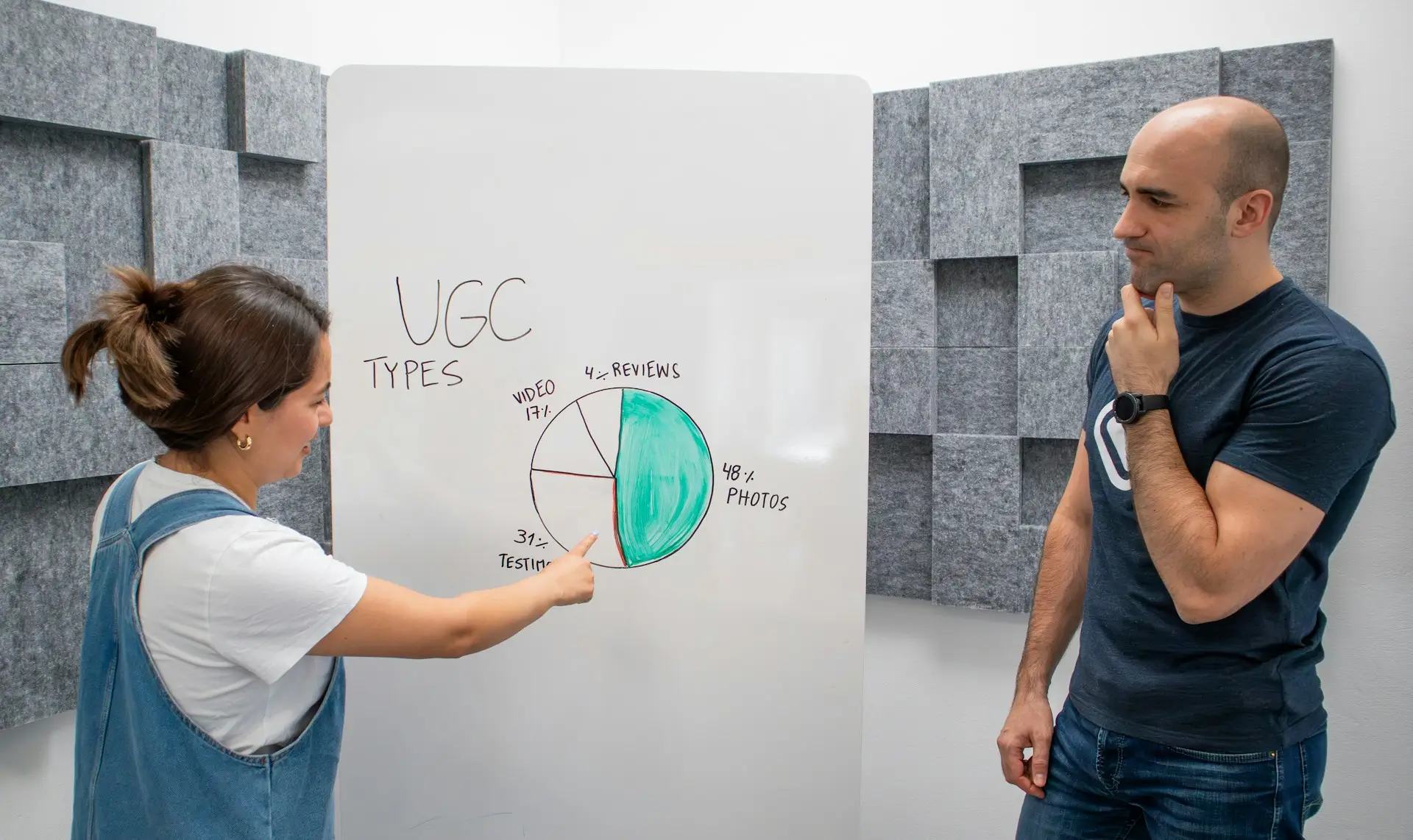
Professional video production: advantages, constraints and ideal contexts
Professional video production embodies the know-how, seriousness, and the art of telling a story without a hitch. For many brands, it is the essential weapon to launch an institutional campaign, attract investors or meet strict quality requirements. Still need to Choosing the right video production agency to guarantee a result that meets the ambitions.
The know-how of the video studio
Art direction, casting, storytelling and advanced post-production make it possible to produce videos that are perfectly aligned with the brand's identity and strategic goals.
Investment and constraints of pro video
High budgets, production deadlines and team coordination are the main constraints. It is therefore essential to assess the relevance of this format according to the real challenge of the project.
Scenarios where to focus on professional video
Corporate communication, premium launches, TV ads or institutional films are the most suitable contexts for professional video.
Building a hybrid video strategy: mixing UGC and pro video
Mixing UGC and professional video makes it possible to combine proximity, commitment and image control. This hybrid approach is now one of the most efficient.
Examples of brands that have succeeded in their hybrid approach
Several French brands have been able to integrate UGC into their campaigns while maintaining a strong professional framework, thus creating a balance between authenticity and a premium image.
Tips for balancing UGC and pro video in your strategy
Defining highlights, allocating the budget intelligently, encouraging participation and analysing performance are the keys to a successful hybrid strategy.
Factors of choice between UGC and video pro
Marketing objectives, target audience, available resources, calendar and distribution channels are the main criteria to be analyzed to make the right choice.
Trends 2025-2026: what video strategy to go for
The rise of co-creation, the hybridization of formats and the adaptation of professional studios to social media codes mark the current evolution of video strategy.
Conclusion and recommendations for your video strategy
UGC and professional video are no longer opposed, they complement each other. The key lies in a well-thought-out strategy that is aligned with brand goals and is able to evolve with audience expectations.
FAQ: UGC or professional video, what is the best strategy in 2026?
What place for UGC in a communication strategy?
The UGC plays a central role in a communication strategy focused on authenticity and commitment. Used in a content strategy, this lever makes it possible to enhance the voice of customers while strengthening the credibility of a brand. For the advertisers, it is a powerful tool to reach their targets through spontaneous content adapted to social media.
Why do advertisers still rely on professional video?
In 2026, the advertisers continue to incorporate professional video into their marketing strategy to establish their positioning and offer a controlled image. This format makes it possible to produce content Relevant Who value your website, improve the Loyalty and effectively serve the purposes of Content marketing Or ofInbound marketing.
UGC or pro video: which solution is the most relevant for your digital strategy?
It all depends on your goals. A brand that wants to generate interaction on social media or improve your natural referencing thanks to organic shares will be able to put a strategy in place Agile UGC. Conversely, professional video will be more Relevant to strengthen the branding, optimize the SEO and address prospects B2B in a structured approach of web marketing.
Can UGC and pro video be combined in a coherent content strategy?
Yes. Numerous project managers adopt a editorial strategy hybrid, combining the emotional power of UGC with the professionalism of brand video. This mix is integrated into a Scheduling of content creation well defined, respecting a editorial line clear. This allows you to activate various levers depending on the platforms and the objectives.
How to optimize SEO with video?
Video, whether UGC or professional, contributes to improving the seo of your website if it is well exploited. Enriching pages with videos increases the time spent on the site, promotes positive behavioral signals and allowsuse a strategy of keywords targeted in titles, descriptions, and transcripts. This plays a major role in visibility on search engines.
What role does inbound marketing play in choosing between UGC and pro video?
In a logic ofInbound, the content should provide value. UGC helps capture attention in a natural way, while pro video provides depth and reassurance. A good inbound marketing strategy alternates the two formats to nourish each stage of the customer journey, from acquisition to Loyalty.
How to use influencers in a UGC strategy?
Les influencers play a key role in boosting a UGC campaign. As ambassadors, they make it possible to structure a editorial strategy engaging, while maintaining a personal touch that speaks to audiences. The content generated in this way is particularly effective for build loyalty and convert prospects qualified.
What tools to automate the distribution of videos?
In a logic ofAutomation, the platforms of web marketing allow you to automatically program and broadcast videos on social media, according to a Scheduling defined. This makes it possible to optimize performance while integrating video into scenarios ofInbound marketing or campaigns AdWords well targeted.